
Sylvania Township Neighbors on One Block
Public records help organize a Sylvania Township neighbors question. They do not create a household roster. The Lucas County Auditor AREIS County Map places a subject parcel beside the lots around it, with layers for street lines, jurisdiction, ZIP Codes, historic lot lines, and other map context. Parcel outputs identify the owner of record, mailing information, transfer data, and property reference details. Then check a Recorder instrument by legal description. For an older block, the Toledo Lucas County Public Library's post-1910 directory street index can show who was listed at an address in a selected year. That index covers people and businesses alike. Treat it as a dated snapshot.
| Block source | What it contributes near an address | Access channel |
|---|---|---|
| AREIS County Map | Parcel placement, nearby lot selection, street, ZIP, jurisdiction, and historic-lot layers | Free public map and Auditor assistance |
| AREIS parcel output | Owner of record, situs, tax context, and transfer history for each selected parcel | Free portal or Auditor counter |
| Recorder land records | Recorded parties and documents tied to one legal description | Public Access, counter, phone, or copy order |
| TLCPL directories | Historic person or business listing at an address after 1910 | Main Library Local History research |
| Township Community page | Community institutions and service-resource leads | Public Township page, not a member list |
Keep every parcel separate. Adjacent lots can be held by an estate, a business entity, or owners with a mailing address somewhere else entirely. Owner records do not name occupants. Note: a neighboring parcel is not the same thing as a neighboring household, so read each record with that difference in mind.
Map Sylvania Township Neighbors by Parcel
The County Map is the practical first tool for a close-range Sylvania Township neighbors search. Search by address, parcel number, or nearest intersection. Then use map browse and multiple-parcel selection to mark only the lots immediately beside the subject parcel. The official guide documents layers for parcels, streets, jurisdiction, ZIP Codes, and historic lot lines, plus distance estimates and map-image download. That separates a real boundary from a postal guess. They settle no title dispute. They also decide no legal boundary question.
- Locate the subject parcel in AREIS using the address, parcel number, or nearest intersection.
- Open County Map and select the immediately adjacent parcels rather than a broad ZIP area.
- Record each parcel number, owner of record, situs, legal description, and available transfer context as separate entries.
- Compare the legal description before using Recorder documents to link an owner or deed to that parcel.
- For a historical block, check the library's street index for the selected year and compare it with maps or obituaries.
The workflow runs address to parcel, parcel to legal description, legal description to recorded document, then a dated directory or archival source when the question is historical. The Sylvania Township Street Directory follows the longer record chain for an entire named street. The block method is tighter. It looks only at the lots nearest one address.
Sylvania Township Owners Are Not Neighbors
A parcel record can name an owner and show a mailing address. Neither field proves who lives at the property. The mailing address may belong to an estate, a trustee, an owner living elsewhere, or a tax professional. Auditor property output is a record fact. It is not an occupancy finding. Keeping that distinction clear stops a Sylvania Township neighbors search from turning an owner-of-record result into a claim about everyone at a home.
AREIS can show seller, buyer, transfer date, sale price, and deed type. Historical transfer-card images cover transfers before 2000. Those cards add another dated ownership clue. The next check is the Recorder, using the same legal description and party names. Recorded documents often use legal descriptions rather than street addresses, as the Recorder itself notes. A map is a powerful view of nearby parcels. Still, Lucas County treats its map information as tax and reference material, not a legal survey or legal description.
Parcel check. Record the parcel number and shortened legal description before opening land documents, because a street label can appear on more than one parcel.
Follow Sylvania Township Parcels to Deeds
The Lucas County Recorder Public Access portal opens a guest session after its disclaimer. Name, Advanced, and Instrument searches are supported. Name search provides last-name or organization and first-name fields. Match operators, party choices, date ranges, and optional legal filters refine the results. Result columns can include the short legal description, party role, other party, instrument type, recorded date, instrument ID, book or page, consideration, and notes. An indexed party took part in a land instrument. That participation is not proof of present residency.
Match the parcel's legal description before using Recorder material. Start with a transfer record showing buyer and seller, then a Recorder instrument matching the legal description and date. Some documents are not visible or legible online. For those, the Recorder offers a counter, phone, email, fax, and copy-order routes. Its office page calls the records permanent archival land records open to the public. No online start year is stated. For older records, ask about counter or archival access. Guessing the web index is complete is the riskier path.
Community Resources for Sylvania Township Neighbors
Sylvania Township's official community material helps locate organizations and the government or service entity tied to an address. It does not show members or residents. The Township publishes no official neighborhood-association, HOA, block-watch, or civic-council membership directory. Treat a community organization as a place to ask about its own public programs or local-history resources. It is no path to private household information. That keeps a neighbor lookup within proper bounds.
Sylvania Historical Village
A local-history lead for period context, photographs, and area history. Confirm collection access directly with the organization.
Toledo Lucas County Public Library
Holds local-history research, directories, maps, obituary tools, and appointments for historical questions.
Sylvania Community Services
Appears in the Township resource layer, which identifies community services rather than a household directory.
Service boundaries shape where a record lives. The Township Community page lays out this resource layer and shows how the Township works with the City of Sylvania, the City of Toledo, and the Lucas County Sanitary Engineer. Those ties matter. A file about service, engineering, or zoning can sit with any of them, depending on the address involved. The page itself lists no neighbors and holds no membership roster, so it will not answer who lives on a given street.
For records policy, start one level up. The Township Administration page points to the public-record rules and the retention schedule that govern how long files are kept. Checking that policy first saves time before any resident lookup.
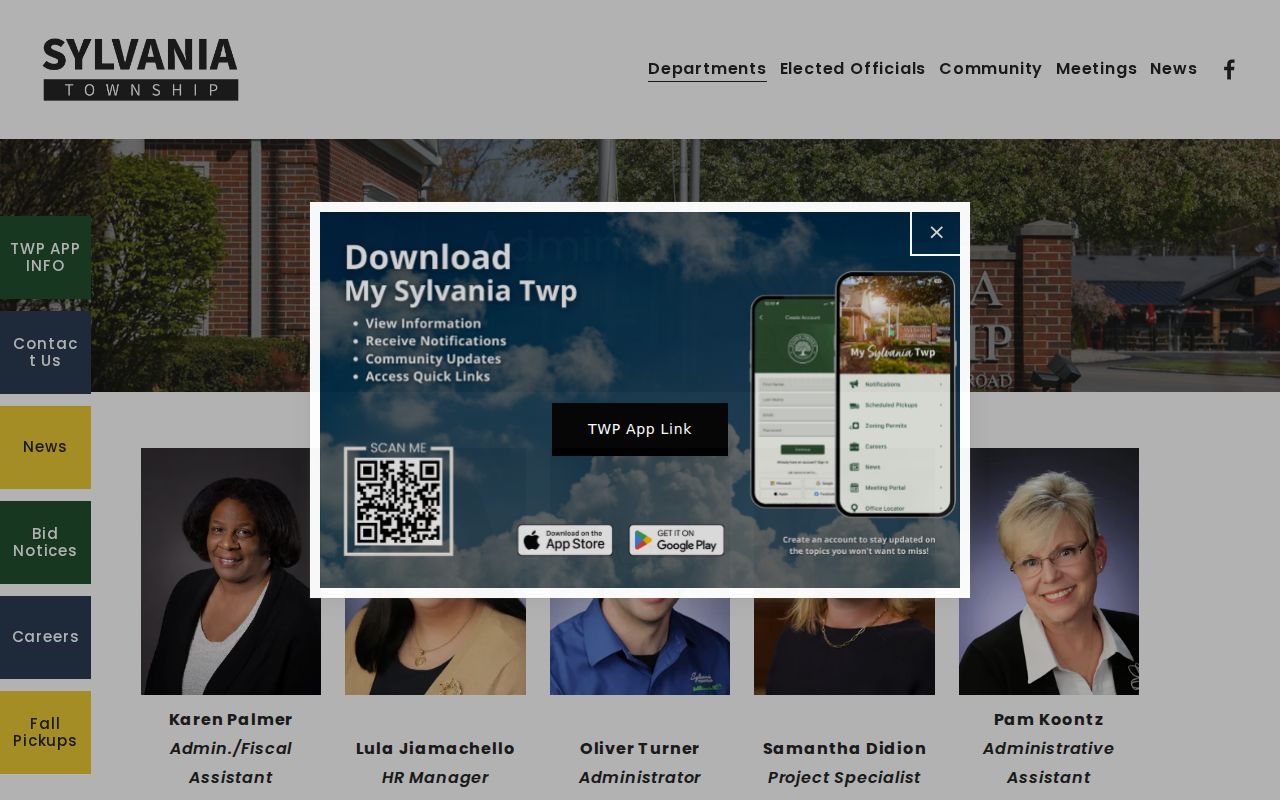
Skip the idea of a generalized roster of nearby people. The better route is the office that created the record in the first place.
Historic Sylvania Township Neighbor Clues
For a historic Sylvania Township block, start with the Toledo Lucas County Public Library's Polk directories. The library holds directories from 1858 to 1935 on microfilm. The 1936 to present volumes sit in bound books. Beginning in 1910, the street and address sections run alphabetically. That means you can pull a chosen year. Then check who or what was listed at an address. Treat a listing as a dated historical clue. It is not a modern residency conclusion or a title record.
Pair the directory year with other evidence. A map, an obituary, an estate record, or a federal census entry can confirm or complicate what the street directory says. TLCPL also describes property images and block cards for Lucas County covering 1937 to 1965. It offers maps and building-history help too. Staff can track down an index, a reel, an obituary scan, or an abbreviation key. That assistance matters most when a historic entry never surfaces through an ordinary web search.
Sylvania Township Public Records Limits
Ohio's Public Records Act, R.C. 149.43, opens government records to the public, subject to exemptions. A strong request names an existing record and the office that created it. Add a date, parcel, document, or case number when you know one. The law supports inspection at reasonable times and prompt preparation within a reasonable period. It sets no universal response deadline. When a request is too broad, the office should offer a chance to revise it. It should also explain how its records are kept.
For anything tied to an address, go to the office that made the record. The Auditor, Recorder, Clerk, and Planning and Zoning each hold their own files. Other named agencies hold their own files as well. The Lucas County Records Center stores many county materials. Even so, it directs requesters back to the creating office. The Toledo-Lucas County Health Department also runs a records-request channel. It covers the responsive records it holds under the Act.
The official R.C. 149.43 text is the starting point for the state access rule.
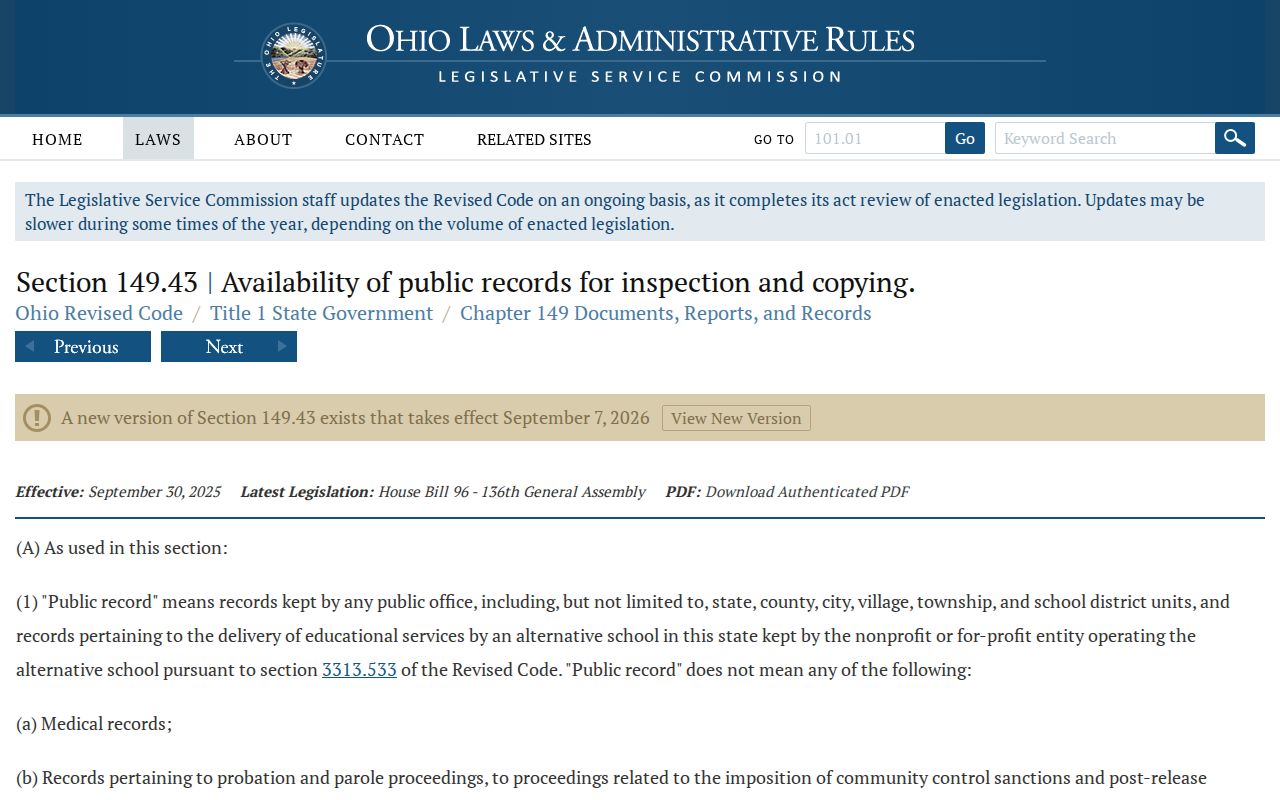
The lesson holds across offices. Ask a custodian for a defined public record, not a block-wide personal profile. The Toledo-Lucas County Health Department request page shows one such local channel in practice.
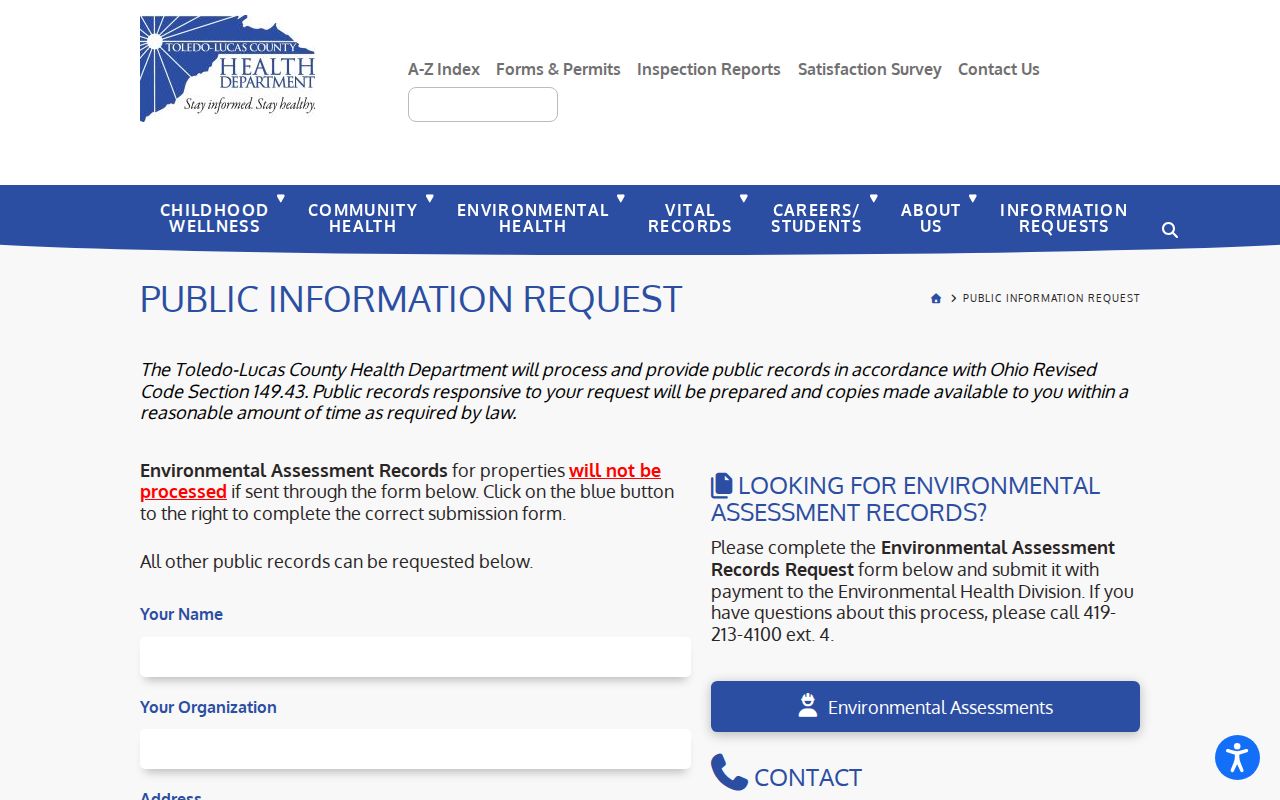
That channel reaches only responsive Health Department records. A property, court, or Township record still needs its own request to the office that created it.
Privacy for Sylvania Township Neighbor Searches
Some information stays closed even where property and land records are public. Ohio's Safe at Home Address Confidentiality Program gives qualifying participants a substitute address. It also shields their information in public voter material. Under R.C. 111.42, the program exists as a safety protection. It is not a gap to be worked around through other sources. Voter records likewise exclude confidential data and specified personal identifiers. A state voter lookup checks a named registration and precinct. It is not a browse tool for a whole block.
Identity numbers, medical and financial account numbers, protected court material, and restricted vital data carry additional limits. Some limits come from state law. Others come from the record custodian. Never read a redaction as a clue to where a protected person lives. Never read a substitute address or a missing result that way either. If a parcel record or public page looks wrong, ask the custodian how to correct it. For a suspicious solicitation built on public information, keep the communication. Then use an official reporting route rather than handing over more personal data.
The Federal Trade Commission fraud-reporting page is one official destination for reporting a deceptive consumer transaction. It accepts complaints about a wide range of scams.
That page serves one purpose. It reports suspected deceptive transactions, and it is not a source for identifying people around an address.
Lawful use. Use Sylvania Township neighbors records for personal, lawful research and never use an address, map, or record detail to stalk, harass, intimidate, or harm anyone.