
Sylvania Township Previous Residents by Era
A prior-address search changes tools as it moves backward. The Lucas County Auditor’s AREIS portal anchors the present with the parcel, tax context, transfer history, and card images covering transfers before 2000. Recorder documents then carry the ownership chain back. The Toledo Lucas County Public Library adds household and structure evidence through Polk directories, maps, block cards, newspapers, and obituary indexing. Block cards and newspapers add texture. No one source names every earlier occupant. Use the era table as a source selector, then log the date and limitation of every result. A transaction record stays distinct from a household record. And a Sylvania Township directory listing is never proof of title.
| Historical source | Documented span | Holder or route | What it can show |
|---|---|---|---|
| AREIS property and transfer data | Current tax data; multi-year records | Lucas County Auditor portal or counter | Parcel, owner of record, transfer details |
| AREIS transfer cards | Transfers before 2000 | Parcel transfer output | Assessment-era transfer image evidence |
| Recorder land documents | Permanent archival collection; online start year not published | Public Access, counter, phone, or copy order | Recorded parties and land instruments |
| Polk directories | 1858-1935 microfilm; 1936-present books; address index from 1910 | TLCPL Main Library | Listed person or business by selected year |
| Block cards and property images | 1937-1965 | TLCPL local-history resources | Assessment and visual property context |
Federal census pages open on a 72-year release schedule. The Toledo Blade obituary index reaches back to 1837. Both can close a Sylvania Township household trail when directory and parcel work stall. Match every census or obituary hit to the address and date already established through the parcel and directory records first.
Begin Sylvania Township Address History
Start at the Lucas County Auditor’s AREIS portal with the present address, parcel number, or County Map. An address query takes Street Number, Direction, Street Name, Suffix, and an optional Unit. An older number may not resolve. County Map can search by nearest intersection instead. AREIS returns the parcel number, situs address, owner of record, tax-year context, and the short legal description needed to compare later records.
The situs address identifies the property itself. The owner mailing address is where tax material goes. That difference is common. Estates, trustees, out-of-area owners, and tax representatives all explain it. Treat both fields as labels to verify, never as proof that each named person lived there.
An Auditor counter operates at One Government Center, Suite 600, reachable at 419-213-4406. Online results reflect the current tax year. The map is not a legal survey. When a Sylvania Township address clashes with an old source, hold onto the parcel number and legal description before changing search terms.
Sylvania Township Transfer-Card Evidence
Read the Sylvania Township parcel transfer history before touching the Recorder index. AREIS lists buyer, seller, transfer date, sale price, and deed type. It can also display historic transfer-card images for transfers before 2000. That adds an assessment-era layer a current tax card cannot supply. A seller becomes the next lead in the ownership sequence. Keep the parcel and legal description matched throughout.
The Lucas County Records Center manages county retention. It does not process public requests directly. It points requesters to the creating office instead. For a property transfer, that office is the Auditor or the Recorder. It is not the storage facility.
Log the buyer, seller, date, deed type, price, parcel number, and legal description as one unit. A common name can mislead. So can a nearby lot or a similar Sylvania Township street label. The transfer record is a bridge, not occupancy proof.
Trace Sylvania Township Past Owners
The Lucas County Recorder holds deeds, mortgages, liens, plats, land contracts, and certificates of transfer. Its Public Access search opens a guest session after the disclaimer. An account is optional for saved criteria and history. Name, Advanced, and instrument modes are all offered. The Recorder publishes no index start year. A Sylvania Township older-record search may therefore need the counter or a phone call rather than a guessed cutoff.
- Open the current AREIS parcel and record its legal description, current owner, most recent transfer date, seller, buyer, and deed type.
- Search the current buyer or grantee in Recorder Public Access, then compare the recorded date, instrument, and short legal description to the parcel.
- Use the earlier seller or grantor as the next likely grantee search, but continue only when the same legal description or lot matches.
- Repeat the comparison for each earlier transaction. Keep plats and subdivision names with the notes if the address format changes.
- For an older gap, contact the Recorder counter, phone, email, fax, or copy-order route to identify available book or microfilm access.
- Grantor
- The party conveying an interest in a recorded land document.
- Grantee
- The party receiving an interest in that document, often the next name to search backward.
- Chain of title
- The sequence of recorded transfers tied to the same parcel or legal description.
- Legal description
- The lot, subdivision, or metes-and-bounds identity that usually outlasts a street-number change.
Recorder staff work from One Government Center, Suite 700, Toledo, reachable by phone at 419-213-4400, email, fax, or the stated copy-order route. Paper copies run $2 per page. The office warns against unsolicited certified-deed offers quoting far higher prices. Confirm the current fee before any Sylvania Township order.
Sylvania Township Address Listings After 1910
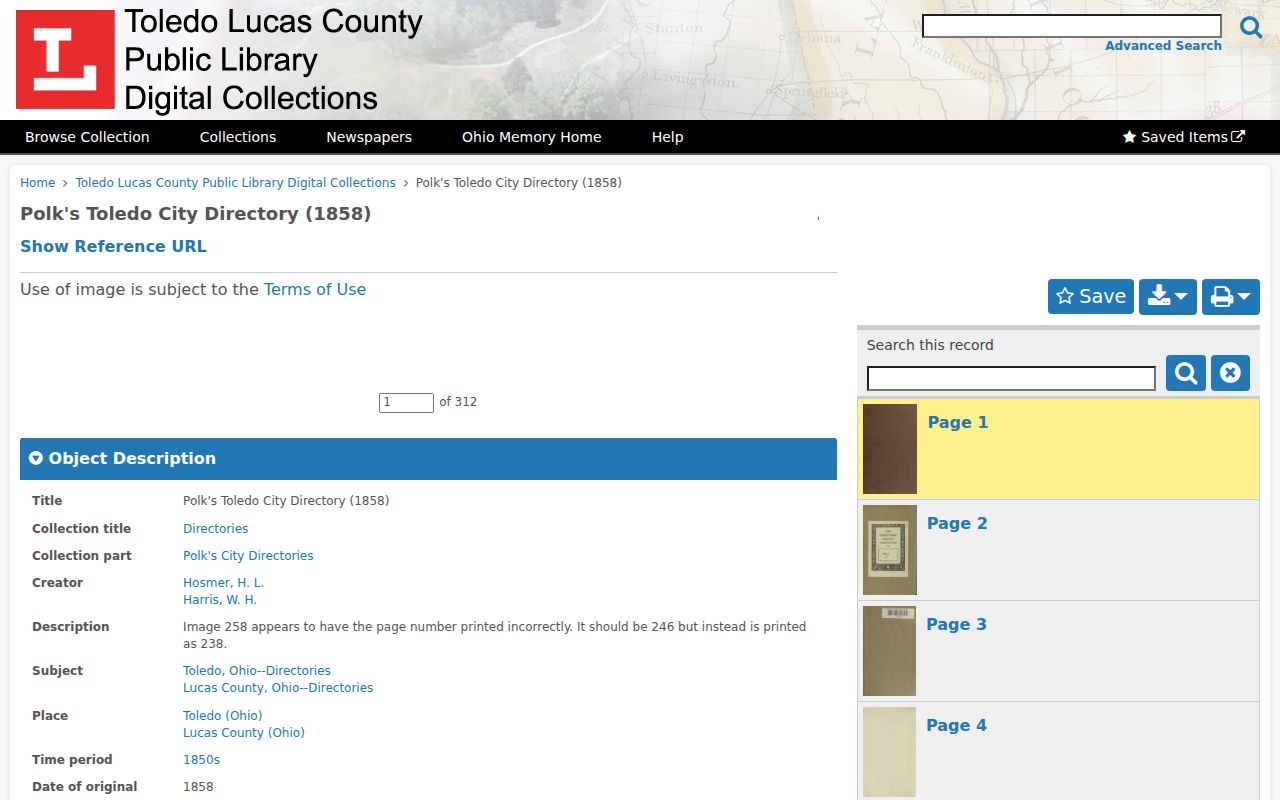
Owners are only half of an address history. TLCPL notes that Polk’s Toledo directories began street-and-address indexing in 1910. Pick a post-1910 year and the street section shows the person or business listed at the address. The microfilm run spans 1858 through 1935. Books from 1936 onward continue the set. Name-led work fills the gaps.
The digitized Lucas County directory material in Ohio Memory offers one online entry point. The Main Library’s Local History and Genealogy Department remains the channel for physical volumes, microfilm, maps, and staff help. Call 419-259-5233 for an appointment. Staff can also help with a selected year, obituary, map, or abbreviation key.
Formats, collection years, and tips for reading each entry sit in the Sylvania Township Directory Book. An address listing only proves a point in time. It cannot settle title questions or capture every occupant who passed through a Sylvania Township property.
Map Sylvania Township Address History
Maps and assessment images can date a place before any name attaches to it. TLCPL points to Auditor property images and block cards covering 1937 through 1965. Sanborn maps come in an Ohio series dated 1882 through 1962. Vintage Aerial coverage runs from the 1960s into the early 2000s. Coverage is not uniform, though. Always check the specific Sylvania Township address and year. Do not assume a map series reaches that spot.
County Map adds parcel, street line, jurisdiction, ZIP, and historic-lot-line layers. A directory may spell a street in an unfamiliar form. Compare those layers against the legal description. Sylvania Township also predates Lucas County itself. Very early material may sit under the area’s shift from Monroe County, Michigan, to Wood County. It then moved to Lucas County in 1836. That jurisdiction trail is a clue for deep research. It is not a reason to expect every earlier record inside a current county file.
The local history article behind that early jurisdiction context is available through Sylvania Township historical material.
Note: A Sylvania or Toledo mailing label does not settle Township or municipal jurisdiction, so verify the parcel and the right agency before requesting a historical address file.
Sylvania Township Household Evidence
Match a directory year with a census year. That turns a bare listed name into a fuller Sylvania Township household context. Federal census schedules open to the public on the 72-year release cycle. TLCPL provides historical census access through HeritageQuest and other local resources. Its Toledo Blade obituary index stretches from 1837 to the present. An obituary, cemetery entry, or Probate record can then explain why a name vanished from an address. It may point to death, a move, or another household shift.
- Choose a directory year and copy the listed name, address, page, and any relevant abbreviation.
- Locate the closest available public census year, then compare household members and location carefully.
- Check the next directory volume for a move, a new listing, or a changed business association.
- Use the Blade obituary index, cemetery information, or Probate records to test a death or heir connection.
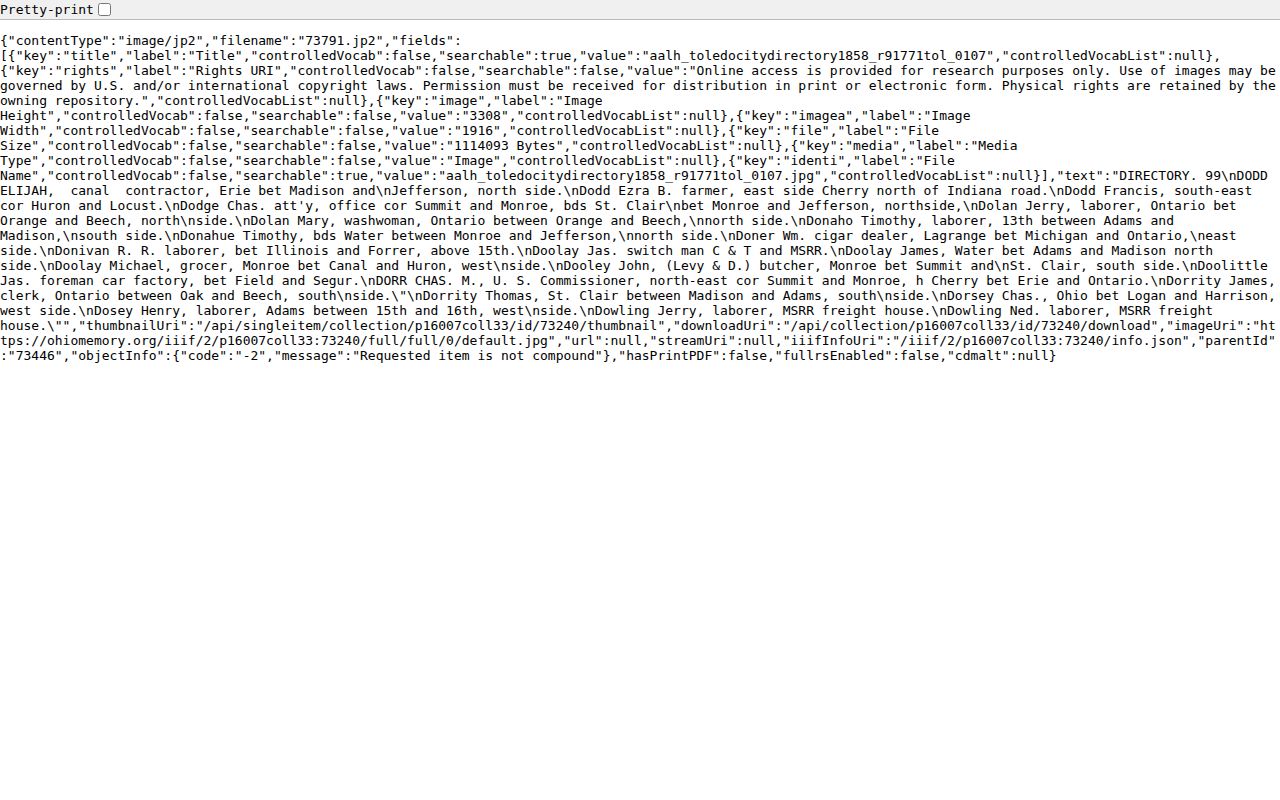
The Ohio History Connection historical death index covers indexed Ohio death-certificate series for 1913-1944 and 1954-1970, leaving gaps in other years. The Ohio Memory record shown below is an index-based historical source. Pair it with the library, cemetery, Probate, or local vital-record route rather than reading it as a complete modern certificate.
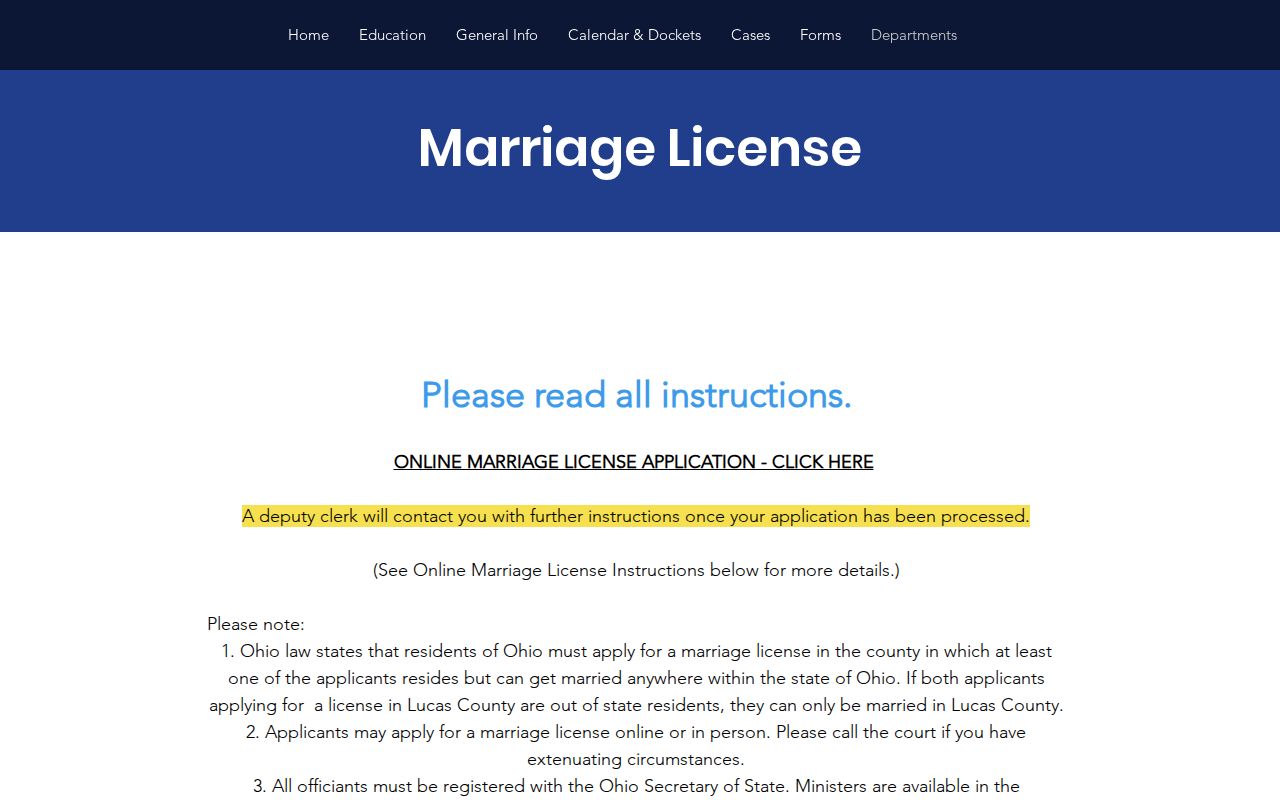
A marriage license is a Probate Court record, not an address roster. Still, it can supply a relationship lead for a carefully documented Sylvania Township family trail. The Lucas County Probate Court marriage-license route sends marriage questions straight to the court.
Use Sylvania Township Previous Residents Lawfully
House history, family history, heir work, and local research are all sound reasons. Each one justifies keeping a dated record trail. Keep four categories separate, though. These are the owner of record, a tax mailing address, a recorded party, and a listed occupant. AREIS, the Recorder, a directory, and a census each describe different facts at different moments. The current address chain belongs in the Sylvania Township Street Directory workflow. A historical hit is not a claim about a living household.
Lawful use. Use Sylvania Township previous-resident records for personal, family, heir, or house-history research. Do not use historical or current records to stalk, harass, or harm any person.
When an official Sylvania Township search comes up empty, go to the named custodian. Use its counter, phone, and targeted request route. Ask for an existing record by parcel, address, document type, or date range. The Ohio Public Records Act, R.C. 149.43, does not force an office to build a new resident list. Confidentiality rules still shield protected material.